

 X
X
 facebook
 WhatsApp
 Email
Email





Introduction
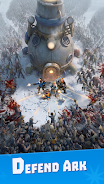
Doomsday Home drops players into a frozen post‑nuclear world where survival depends on careful planning, scavenging, and managing heat on a snowbound train that doubles as your mobile base. In Doomsday Home you take the role of a survivor from a polar mining outpost, tasked with harvesting rare resources, recovering lost technologies buried under the ice, and gradually reconstructing the legendary Nuclear Ark. This introduction outlines the core systems, controls, progression, visual style, level structure, customization, replay considerations, and accessibility options that shape the single‑player experience in Doomsday Home.
Key Features and Experience
Doomsday Home blends exploration, base‑building and narrative-driven objectives into a tense survival strategy game. Players balance short‑term needs like fuel and warmth with long‑term goals such as unlocking technologies and rebuilding critical infrastructure. The environment is dynamic: blizzards reduce visibility and slow traversal while heat management is a constant tactical decision because warmth keeps characters alive but can also disturb dormant dangers beneath the ice. Encounters are emergent rather than scripted, driven by resource choices, route planning, and how aggressively you excavate buried sites.
Gameplay Mechanics and Controls
Gameplay focuses on scavenging expeditions launched from your train, managing onboard systems, and upgrading tools to probe deeper into frozen ruins. Controls are optimized for touch devices: context menus and radial interaction allow you to assign crew tasks, operate machinery, and target excavation sites with taps and drags. Resource nodes require tool use and mini‑management—running a drill drains power and increases heat output, while deploying insulation conserves warmth at the expense of mobility. Heat management itself is a layered mechanic: localized stoves and rerouting power create microclimates inside the train and at external camps, forcing tactical tradeoffs every expedition.
Progression, Research and Customization
Progression centers on recovering lost technologies and converting scavenged materials into practical upgrades. A research tree lets you unlock more efficient heaters, better excavation tools, and defensive countermeasures that change how you approach dangerous zones. Customization applies to both hardware and strategy: the train can be outfitted with modular compartments, storage upgrades, and specialized stations for crafting, while player choices determine whether to prioritize speed, protection, or sustainability. Long‑term objectives, including phased steps toward rebuilding the Nuclear Ark, provide narrative context and measurable milestones that influence mission selection and resource allocation.
Visual Style, Level Structure and Environmental Design
The visual presentation emphasizes stark, cold environments with high‑contrast interiors and muted, icy exteriors that reinforce the setting’s isolation. Weather systems introduce visual cues—drifting snow, limited daylight, and whiteout conditions—that affect navigation and the difficulty of expeditions. Level structure combines persistent base management aboard the train with discrete expedition zones that vary in size and complexity: shallow caches for quick runs, larger strategic sites that require staging and multi‑step excavation, and deep ruins where recovered technology yields significant progression rewards. Lighting, particle effects, and layered sound design work together to signal hidden threats and create atmosphere without relying on excessive text prompts.
Replay Value and Challenge Systems
Replayability comes from configurable challenge parameters and procedural variation in resource distribution and encounter timing. Each playthrough encourages different strategies because resource scarcity, the order in which technologies are found, and the timing of environmental events alter decision trees. The core challenge systems—heat, fuel, and environmental hazards—interact to create a variety of risk‑reward scenarios that reward careful planning and adaptive tactics. Players who prefer higher tension can push for faster expansion at the cost of greater exposure, while conservative approaches emphasize steady growth and careful resource stewardship.
User Experience, Accessibility and Performance
The interface is designed for clarity: concise tooltips, sortable inventories, and adjustable control sensitivity help reduce frustration during complex logistics. Accessibility options include multiple difficulty settings, scalable text, and simplified automation toggles for routine tasks to support different playstyles. Doomsday Home is designed primarily as a single‑player, device‑focused experience with settings to optimize battery and performance on lower‑end hardware. Save systems and clear status indicators aim to make longer sessions manageable and to reduce repetitive micromanagement for players who prefer a more relaxed pacing.
Notes on Playstyle and Expectations
Expect a challenging atmosphere that rewards deliberate choices: the setting is intentionally harsh, and progression can be methodical as you rebuild infrastructure and adapt to environmental threats. If you enjoy survival strategy with emergent storytelling, careful resource balancing, and deep customization of a mobile base, Doomsday Home offers layered gameplay with meaningful long‑term objectives and varied tactical situations on each run.
Information
 Google Play

Many players are looking for Android mod games, but where can they find them? In this collection, players can discover various types of mod games, whether it's fully unlocked levels or unlimited coins. You can easily download and install them with just one click, and the site promises high-speed downloads. We believe everyone will enjoy this collection!



User Comments
Jezzin is a fast-paced ball-trapping arcade game that challenges players to confine bouncing balls inside a room by drawing walls. Combining reflexes, timing, and strategy, Jezzin asks you to swipe to build barriers and avoid collisions while conserving limited lives. With simple controls and a minimalist presentation, the game delivers immediate, tense sessions that reward precise timing and quick thinking. Players who enjoy concise, skill-based levels will appreciate Jezzin's variety of modes that shift the challenge from relaxed puzzling to high-pressure survival and timed runs, making it a compelling pick for short play bursts.

Siêu Anh Hùng Đại Chiến brings a 3D multiverse of superheroes to mobile, letting players collect, build teams and fight across dramatic PvP and PvE modes. Developed as Vietnam’s first fully realized 3D multiverse game, Siêu Anh Hùng Đại Chiến mixes a huge roster of characters with strategic systems so you can customize squads, counter enemies and experience cinematic battles. With over 100 heroes, cross-server clashes, and more than 15 activity types, the game promises variety and long-term progression. If you enjoy character collection, tactical combat and spectacular visuals, this title delivers a compelling action strategy experience.

Thronefall is a compact, award-winning strategy game that blends base-building and action into short, satisfying sessions. Players expand their kingdom by day—constructing mills, walls and archer positions—then face waves of attackers at night in tense survival battles. The design pares down complex mechanics to emphasize meaningful tactical choices: balance your economy against defensive needs, decide between longbowmen or sturdier walls, and pick the moment to charge on horseback. Thronefall appeals to gamers who want quick, replayable rounds with strategic decision-making and thrilling combat without a steep learning curve.

SGMC is a compact turn-based strategy game created for Filipino players who enjoy short, tactical matches that emphasize positioning and timing. SGMC runs in mobile browsers with a portrait-first layout, touch-friendly controls, and lightweight performance so you can jump into a game without installing an app. Matches play out as rooster vs. rooster skirmishes across a small board where players capture territory and fight until one side reaches ten wins, making every decision carry tangible weight in the overall score.
Pak Truck Driving Simulator puts you behind the wheel of colorful Asian trucks in a 3D driving game that challenges players to transport cargo across cities, hill roads and rugged off-road tracks. This simulator blends realistic weather, day-night cycles and varied terrains with customizable trucks, multiple camera angles and smooth controls, making it ideal for fans of heavy-duty driving who enjoy mastering difficult routes and completing missions. Players will also find cultural touches—folk radio, desi dhabas and traditional truck art—that enrich each journey and give the game a distinctive regional feel worth exploring.
Nuclear Fiesta is an unconventional decision-driven game that puts you in control of humanity's fate, letting players choose whether to save or destroy the human race through strategic choices and dramatic scenarios. The game splits into distinct play styles — a savior route where you relocate groups of people to safety, and a destructive route that lets you unleash military force and catastrophic weaponry. With a sandbox mode for unrestricted experimentation and a scoring system that tracks your best runs, Nuclear Fiesta appeals to players who enjoy moral dilemmas, creative strategies, and highly replayable gameplay experiences.