
 X
 facebook
 WhatsApp
 Email
Introduction
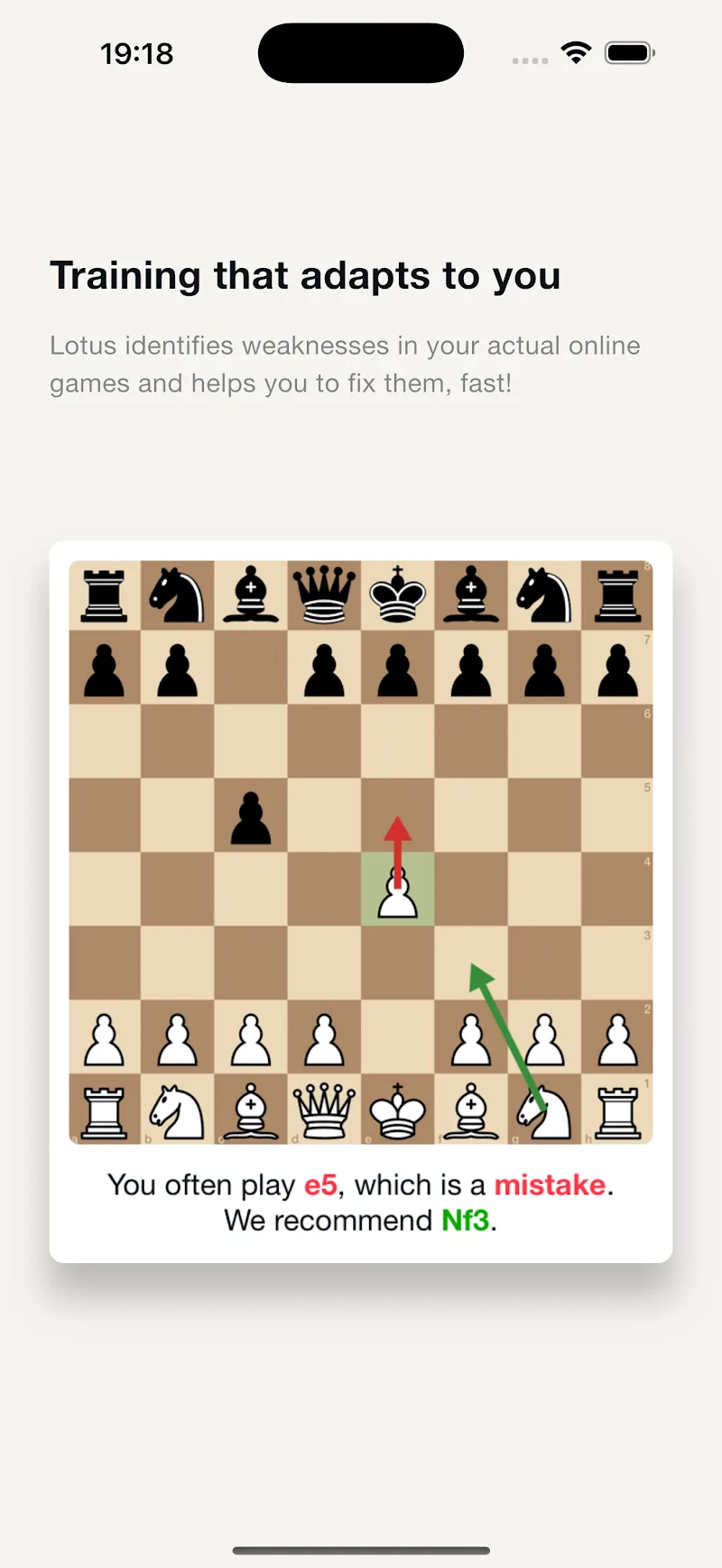
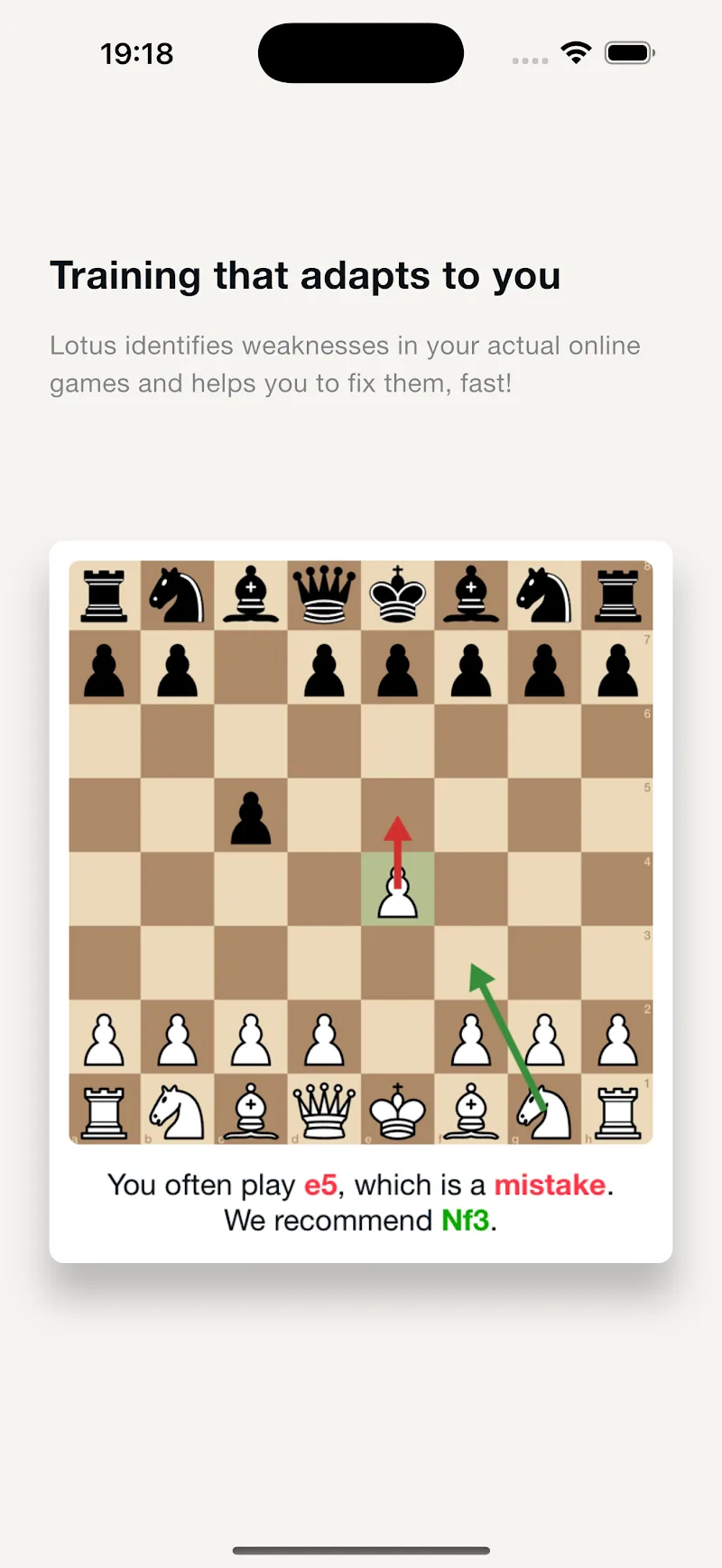
Lotus Chess is an opening-focused chess trainer that uses machine learning to analyze your games and deliver short, targeted practice designed to improve your results from move one. Lotus Chess studies recurring patterns in how you respond to common opening choices, then creates daily exercises that reinforce practical ideas and reactions rather than rote memorization.
How the training works
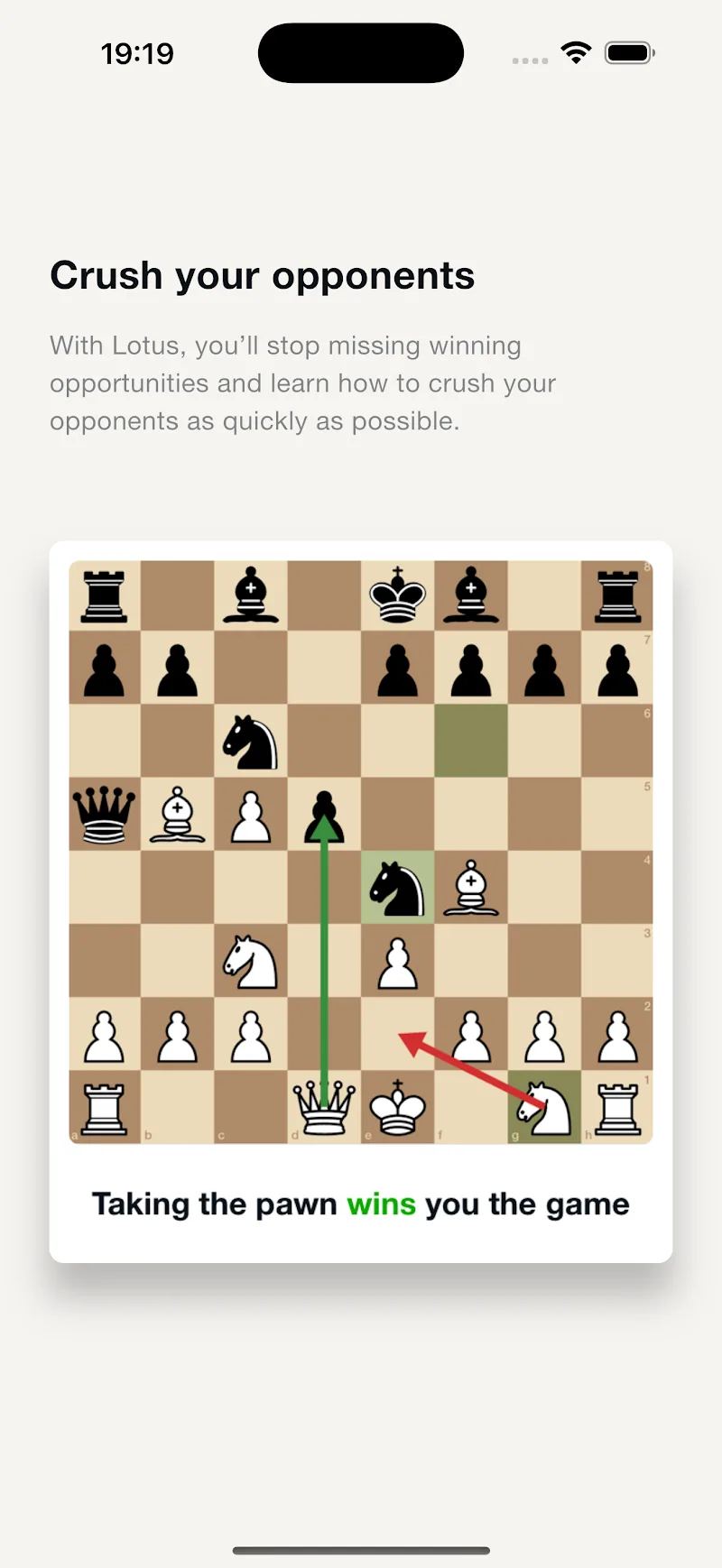
The core gameplay in Lotus Chess revolves around scenario-based drills: you are presented with realistic opening positions drawn from a large collection of human games and asked to choose or play the best continuation for the side to move. Each scenario includes contextual information—typical plans, tactical motifs, and common follow-up moves—so you can learn the reasoning behind the recommended lines. The engine that evaluates your choices focuses on human responses and win-probability from early positions, which helps the training emphasize lines that occur in real play instead of engine-only theory.
Controls and interaction
Controls are designed for mobile comfort: tap-to-select, drag-and-drop to move pieces, and a one-tap hint system that highlights safe candidate moves without revealing the full solution. A concise move list tracks progress through a scenario, and an undo option lets you step back and explore alternatives. Timed drills offer an optional clock to simulate pressure, while untimed practice lets you study positions thoughtfully. The interface balances quick micro-sessions with the ability to dive deeper into explanation pages when a position requires more analysis.
Progression and personalization
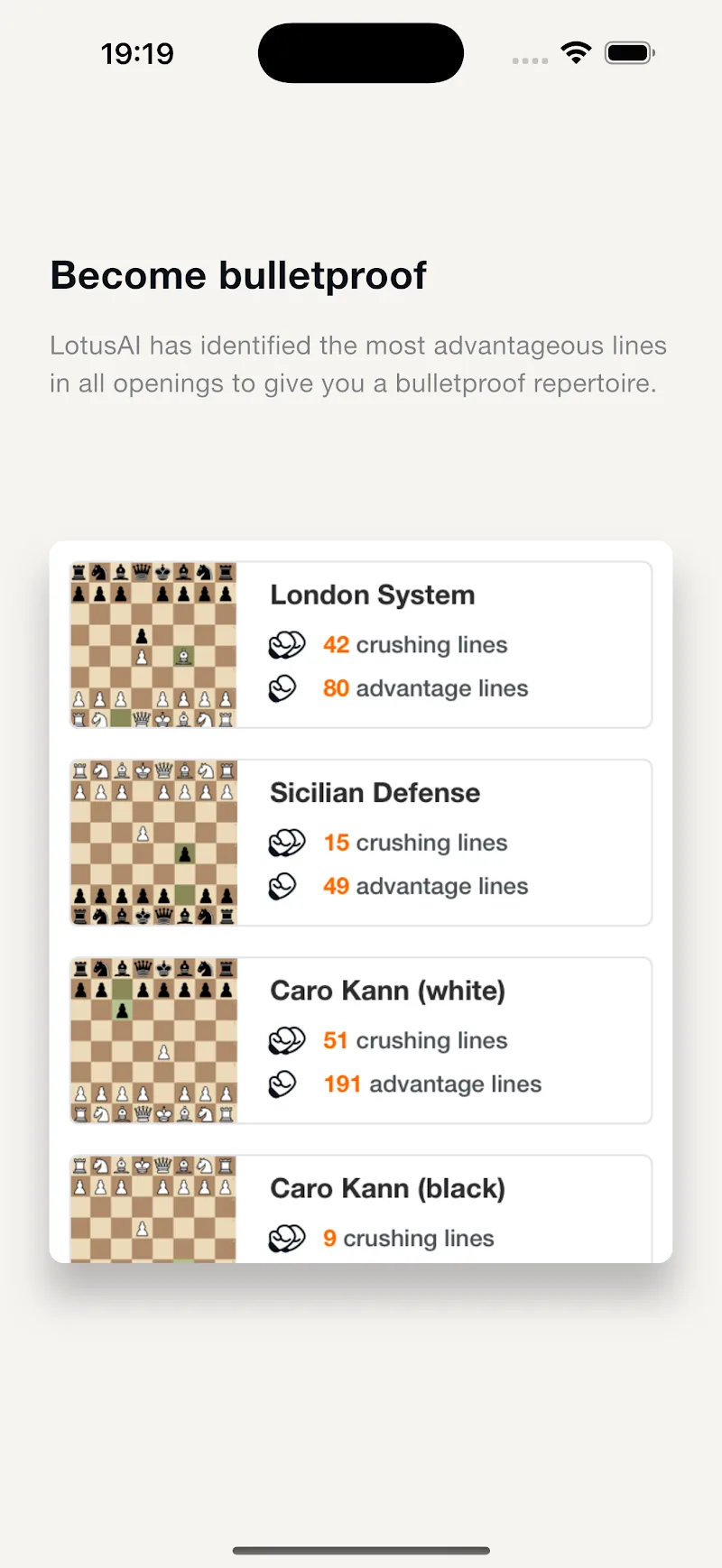
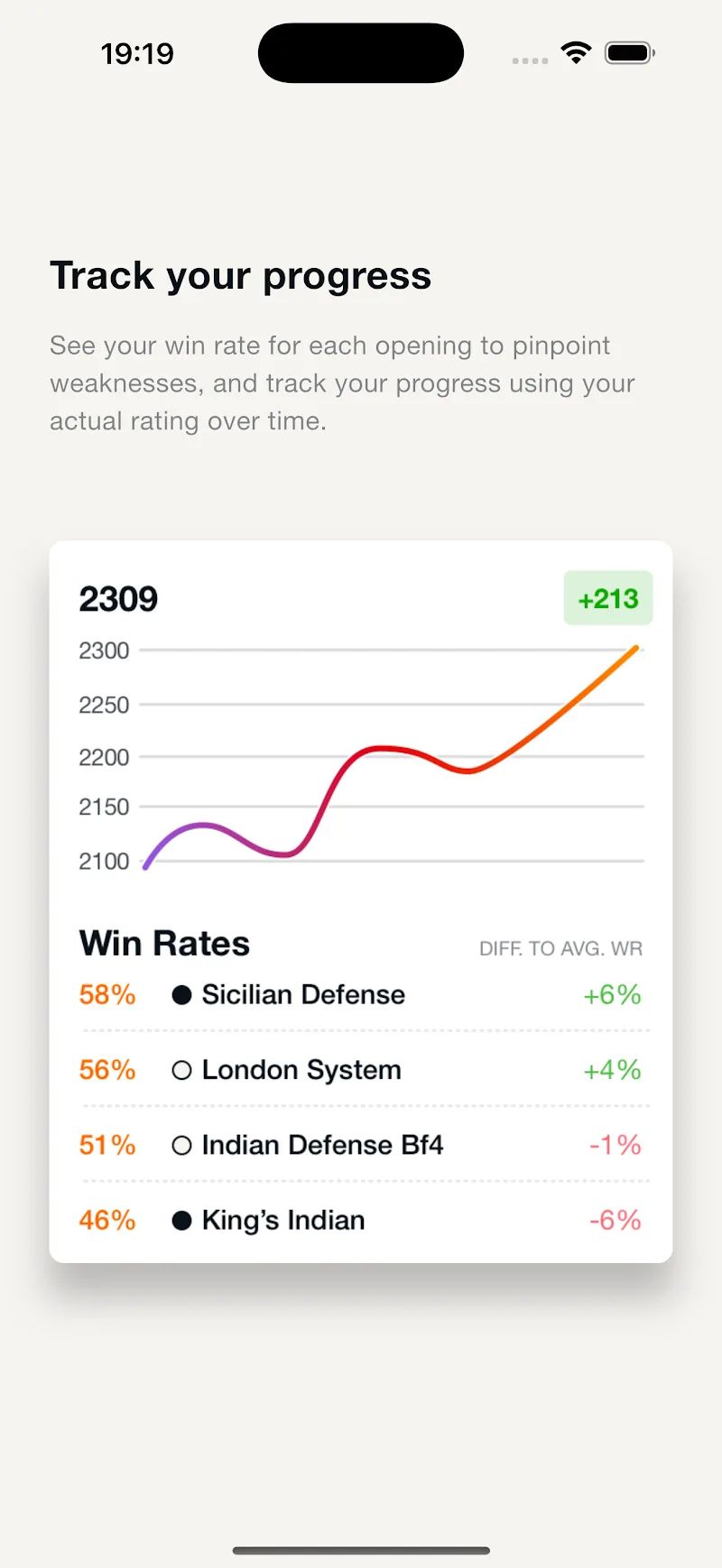
Lotus Chess adapts to your progress using a lightweight progression system that tracks performance patterns rather than raw hours. As you complete exercises you unlock progressively harder modules and focused playlists tailored to openings you actually play. The app highlights recurring errors and reduces repetition of mastered patterns while increasing exposure to weak points. Daily streaks, short-term goals, and a visible improvement log help you maintain momentum; all progress data is local so you can study privately and consistently.
Level structure and challenge systems
Training is organized into tiered modules that range from beginner-friendly motifs to advanced practical traps. Each module contains a series of compact levels made of 3–10 scenarios; completion of a level unlocks the next and introduces fresh variations to avoid rote learning. Regular challenges—such as time-limited batches, accuracy goals, and surprise puzzles taken from human games—encourage replay and variety. The app gradually injects rarer but instructive responses so you learn to handle unexpected moves without overwhelming your study plan.
Visual style and customization
The visual design prioritizes clarity: high-contrast boards, clean notation, and readable fonts make it easy to focus on patterns. Lotus Chess offers multiple board themes and piece sets so players can choose a look that matches their taste or improves visibility. Adjustable animation speed and optional sound cues let you tailor the sensory experience during drills. You can also control session length and difficulty sliders to fit practice into short breaks or longer study blocks.
Replay value and offline access
Replay value comes from the adaptive nature of exercise selection and the breadth of positions drawn from many human games. Randomized permutations of common patterns keep practice fresh, and spaced-repetition-like scheduling increases long-term retention. Most training content is available offline, so you can complete daily exercises and review explanations without a constant network connection; this makes it practical for commutes and offline study sessions.
User experience and accessibility
Onboarding walks new users through basic controls and explains how the app personalizes drills based on play history. Clear move explanations, historical examples, and short rationale notes help bridge the gap between pattern recognition and practical decision-making. Accessibility options include larger boards and pieces, high-contrast themes suitable for color-vision differences, and streamlined navigation for one-handed use. The interface is intentionally uncluttered to keep focus on the board and the logic behind each recommended line.
Lotus Chess is intended for players who want to improve their opening play in a practical, time-efficient way. By combining human-sourced positions, adaptive difficulty, and focused repetition, the app helps you make better choices in the early phase of a game and build a foundation that supports improved middlegame decisions. Whether you study five minutes a day or longer sessions, Lotus Chess aims to make opening practice productive, understandable, and repeatable.
Information
 Google Play
User Comments

Lotus Chess is an opening-focused chess trainer that uses machine learning to analyze your games and deliver short, targeted practice designed to improve your results from move one. Lotus Chess studies recurring patterns in how you respond to common opening choices, then creates daily exercises that reinforce practical ideas and reactions rather than rote memorization.
AYT Coğrafya is a focused study application created to help Turkish high-school students prepare for the AYT Geography exam by combining clear lessons, visual material and practice tests into a single, mobile-friendly tool. AYT Coğrafya places curriculum-aligned topics into concise, step-by-step modules so learners can study in short sessions or longer blocks depending on their schedule, track improvements over time and concentrate revision on the areas that need the most attention.

Plantale blends casual farming simulation with light puzzle mechanics to create a relaxed yet strategic experience. In Plantale you cultivate a variety of hybrid plants, manage limited space, and solve seasonal challenges while unlocking new seeds and tools. Its approachable systems make it easy to enjoy short sessions or longer campaigns.

Finlit.uz is a mobile application that gathers the educational content and interactive services of the Central Bank of the Republic of Uzbekistan’s financial literacy website into a single, easy-to-use platform. It delivers articles, videos, practical tools and structured training designed for schoolchildren, students, entrepreneurs and retirees who want to improve their personal finance skills. Available in three language versions—Uzbek (Cyrillic and Latin) and Russian—the app covers budgeting, loans, deposits, financial markets and currency regulation, and includes calculators, assessments and a personal results journal to track learning progress.

PRESIDENT OF THE PHILIPPINES is an educational trivia app that helps users learn about the country's presidents and vice presidents through carefully written questions and chronological coverage. It tests your recall of the 17 presidents of the Philippines, from the current officeholder back to the earliest leaders, and highlights key events, policies, and milestones from each administration. Users may want it as a compact reference and study aid to refresh historical facts, understand political transitions, and explore how different presidencies shaped national policy. The interface focuses on quizzes and informative prompts to make review efficient and engaging.

PIANO FARM is an educational music app that helps children explore piano basics through a bright, playful interface. It combines interactive instrument sounds, simple visual theory and three learning modes to keep lessons engaging and accessible for young learners. Parents and educators may want it because it turns abstract concepts into tangible actions—using color-coded notes, familiar animal sounds and an easy keyboard layout—so beginners can practice listening, hand coordination and note recognition without pressure. The app is designed as a learning tool rather than a game, suitable for early music education and casual practice sessions.